
Pothole repair
We square up failed areas, remove loose material, and rebuild with proper lift thickness and compaction so the patch resists loosening under turning tires.
Serving Memphis, Tennessee & surrounding areas
Mon–Fri 8am–6pm · Sat 9am–2pm
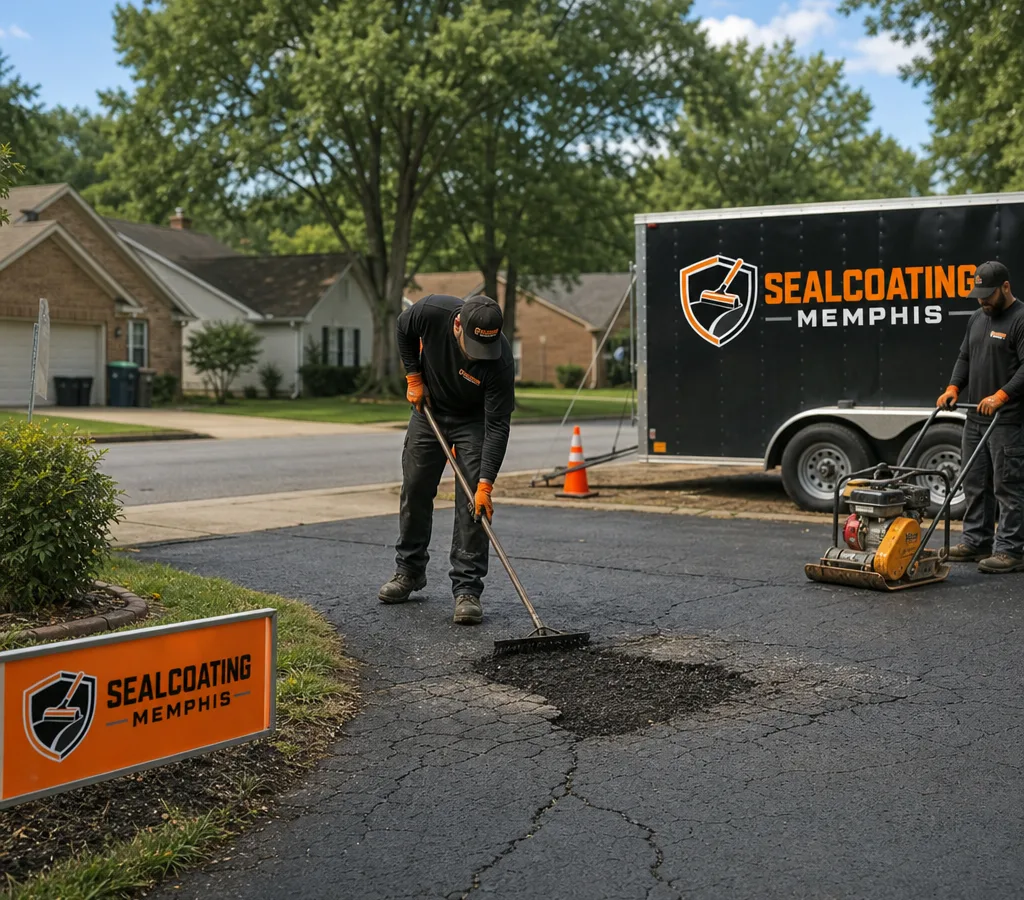
Driveway repair in Memphis
Fix potholes, cracking, and failing edges before they spread. Get a clear repair plan for your asphalt driveway or parking area, with options that match your surface, traffic, and budget.
Repairs matched to the failure
If you are searching for driveway repair Memphis property owners can rely on, you are usually dealing with one of a few problems: potholes that grow after rain, cracks that widen and start raveling at the edges, or low spots that hold water. In Memphis, hot summer pavement temperatures and sudden downpours can turn small defects into bigger failures, especially where cars turn, brake, or sit in the same spot.
Sealcoating Memphis repairs asphalt driveways and paved areas with a practical approach: we identify what is cosmetic versus structural, then choose the repair method that matches how the surface is actually failing. That may be asphalt patching, crack prep and patchwork, edge repair, or targeted pavement maintenance to stabilize the area and slow future damage.
You will get a written scope that spells out the locations being repaired, the material and method, and what to expect during cure time. We work throughout Memphis, with our office at 691 Doctor M.L.K. Jr Ave, Suite 4, Memphis, TN 38126.
Condition-based repairs
We square up failed areas, remove loose material, and rebuild with proper lift thickness and compaction so the patch resists loosening under turning tires.
Alligator cracking, block cracking, and surface raveling usually signal base or age-related breakdown. We recommend repairs that match the cause, not a one-size-fits-all fix.
Driveway edges often break where the base is thin or water undermines the side. Edge repair prevents new cracks from radiating into the main mat.
Standing water accelerates asphalt oxidation and weakening. Where practical, we patch and regrade localized areas to improve drainage and reduce pooling.
High-stress zones like entrances, dumpster paths, and tight turning radii need stronger patch boundaries and solid compaction to last.
We address abrupt transitions at driveway aprons and paved walk approaches to reduce tripping risk and further edge breakdown.
Preparation makes the patch
A repair is only as strong as the prep. For asphalt repair in Memphis, the steps that make the difference are consistent across driveways and parking areas:
Blacktop repair is often discussed like it is different work, but in practice it is the same asphalt material and the same physics. The right method depends on the failure mode: a pothole is a loss of material and support; alligator cracking usually points to fatigue or base failure; raveling can be age, oxidation, or poor surface cohesion.
If your surface is generally in good shape and you are thinking about protection after repairs, asphalt sealcoating is often used to slow oxidation and help keep water out of the surface, but it is not a substitute for patching areas that are already failing.
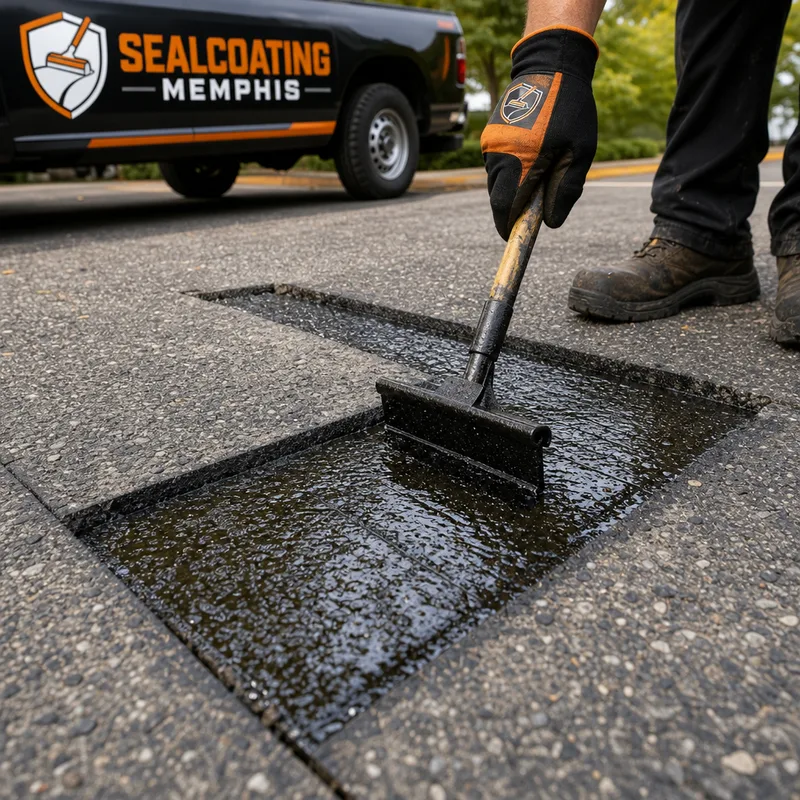
From assessment to cure guidance
Each repair is planned around the cause of failure, base condition, traffic, drainage, and access.
We walk the driveway or paved area with you, mark the failed sections, and note drainage and edge conditions that affect how long repairs will last.
You get a clear plan for pothole repair, asphalt patching, or broader pavement repair, including what we will remove, rebuild, and compact.
We cut back to sound pavement, remove debris and loose asphalt, and prep the base. Where needed, we add or recompact aggregate for support.
We place asphalt in appropriate lifts and compact thoroughly, paying extra attention to seams and edges where patches commonly fail.
Before we leave, we review when you can drive and park on repaired areas, and what to avoid during the first days after work.
Condition-based pricing
Driveway repair in Memphis typically ranges from about $350 to $1,500 for small to mid-size patching and crack-related repairs, while larger or multiple-area asphalt patching projects often run $1,500 to $6,000+. Pricing changes with the number and size of failed areas, whether the base needs rebuilding, patch thickness, saw-cutting and cleanup needs, and how easy it is to access and stage materials on your property. The exact cost is confirmed after an on-site evaluation so the scope matches what your pavement actually needs.
Book Your Free InspectionRepair details in the field
Practical repair answers
Get clear on patching, resurfacing, wet weather, base failure, access, and return-to-traffic timing.
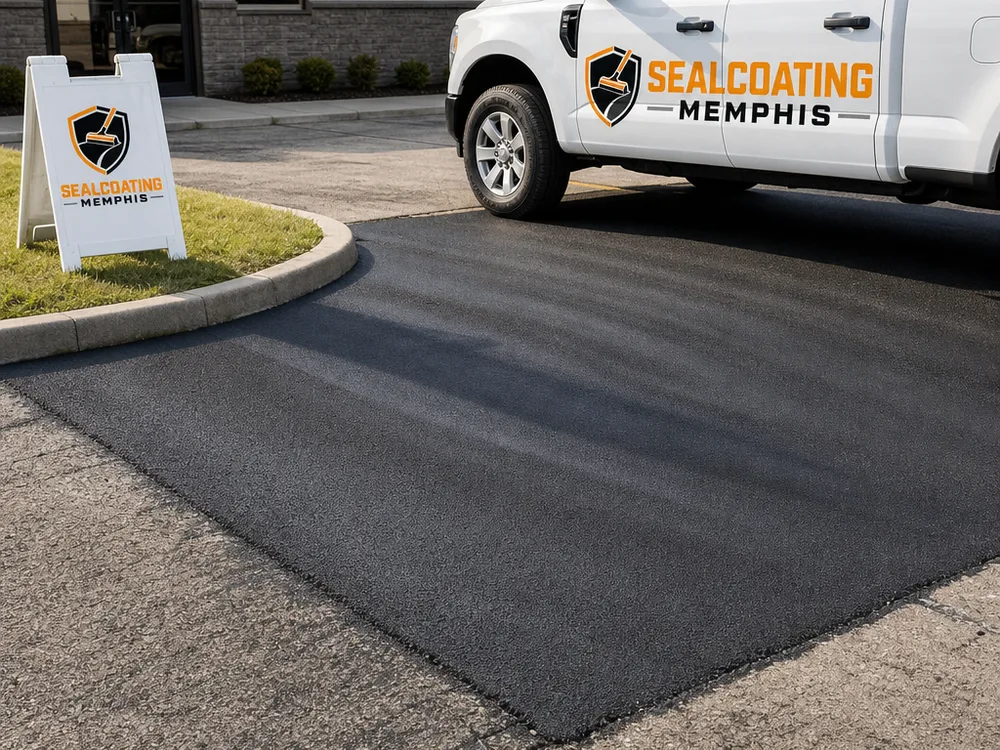
Patching is the right choice when failures are localized (potholes, small areas of alligator cracking, broken edges), while resurfacing makes more sense when the surface is broadly worn but the base is still stable. In Memphis, we often see driveways where a few high-stress zones fail first, so targeted asphalt patching can extend the life of the rest of the pavement without redoing the whole area.
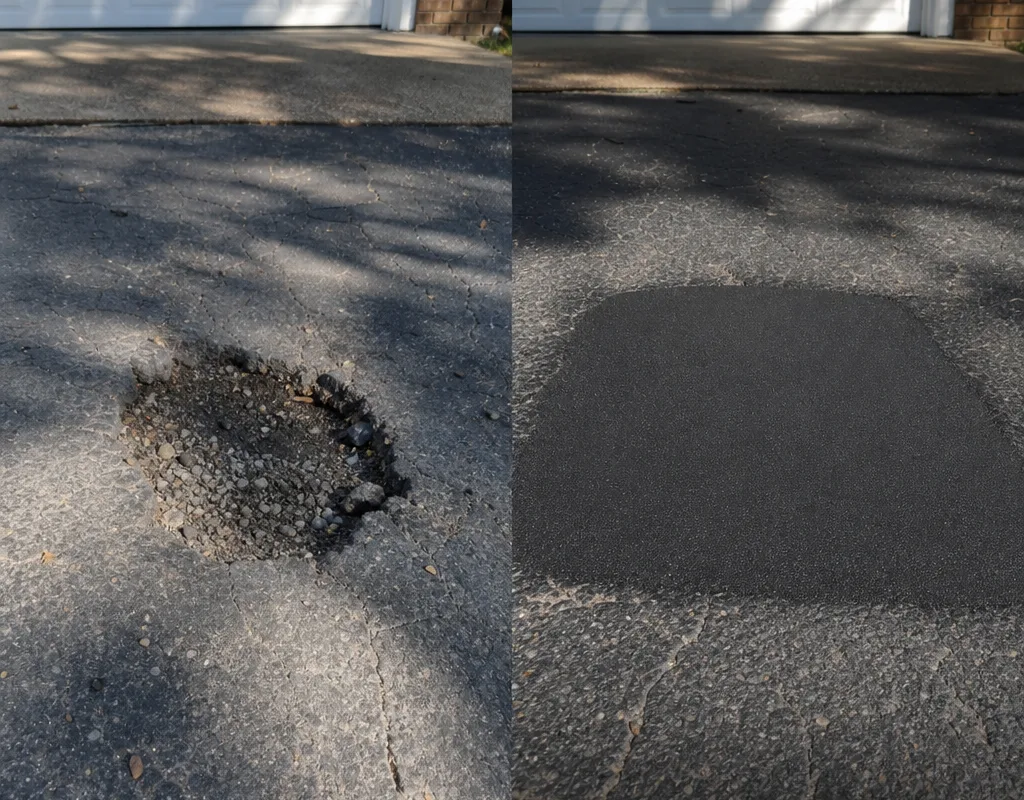
A pothole repair can last for years when the patch is cut back to sound pavement, the base is firm, and the asphalt is placed at proper thickness and compacted well. Patches fail early when loose material is left in place, the base is wet or pumping, or the repair is too thin at the edges where tires peel it up.
Most asphalt repair needs a dry work surface and a base that is not saturated, so timing depends on recent rainfall and how quickly the area dries. After storms, we often recommend waiting until the failed section and surrounding pavement are dry enough for proper bonding and compaction rather than rushing a patch that will not hold.
Alligator cracking usually points to fatigue from repeated loads over a weak spot, commonly tied to a thin asphalt section, poor base support, or water intrusion. For pavement repair, the durable fix is typically removal of the cracked area and rebuilding from the base up, not simply filling the cracks on top.
Yes. Parking lot repair in Memphis often focuses on pothole repair, entrance and turning-lane patching, and fixing trip hazards near pedestrian areas. For businesses, we can also plan repairs to keep access open and reduce disruption during operating hours when scheduling allows.
In many cases, light vehicle traffic can return the same day, but the exact timing depends on patch thickness, air temperature, and the type of material used. We give site-specific guidance after the repair so you know when to drive and when to avoid tight turns or parked loads on fresh patches.
If your driveway or parking area is cracking, crumbling at the edges, or developing potholes, getting the right repair method now usually costs less than letting the failure spread into a wider section of pavement.
Book Your Free InspectionPlan the repair with confidence
Tell us what you are seeing and where it is happening. We will assess the surface, explain the best repair options, and provide a written scope that fits your property in Memphis.